
Category: Global Perspectives

Comparative analysis and news from international self-storage markets.

  • The Art of the Squeeze: Self-Storage in a Tariff-Tangled World

    The Art of the Squeeze: Self-Storage in a Tariff-Tangled World

    When I started thinking about the implications of a renewed Trump presidency on the self-storage industry, tariffs had just been imposed—10% on imports from China, 25% on those from Canada, and similar measures affecting other trading partners. At the time, early executive orders signaled a shift toward protectionist economic policy, but the full impact remained to be seen.

    Fast forward to April 2025, and the situation has intensified. Tariffs on Chinese imports have now surged to 145%, with Beijing responding in kind—raising tariffs on U.S. goods to 125%. Financial markets have reacted sharply, with trillions in value wiped out in recent weeks amid growing investor anxiety and the mounting unpredictability of policy coming out of Washington. The ripple effects are now being felt across global supply chains, construction markets, and investment flows.

    The European Union has not been spared. In response to U.S. tariffs—including a 25% duty on steel and aluminum and a 20% tariff on a broad range of European goods—the EU approved retaliatory tariffs on $23 billion worth of U.S. products. These measures target items such as soybeans, motorcycles, and yachts, and are set to be implemented in stages throughout the year. While the EU has expressed a preference for negotiation, the escalating trade tensions have already begun to strain transatlantic economic relations.

    For the self-storage sector, the implications are becoming clearer—but not necessarily simpler. While the industry has proven resilient in past downturns, this current period of economic turbulence, trade disruption, and monetary uncertainty presents a new kind of test. What began as a concern over rising construction costs or interest rates may now evolve into a broader reckoning with investor sentiment, capital availability, and long-term development strategies. The rest of this article explores how this shifting environment could reshape the trajectory of self-storage in both the U.S. and Europe—and what may lie ahead.

    A Strong Market Meets Economic Uncertainty

    The self-storage industry entered 2025 in relatively strong shape. In Europe, M&A activity surged in 2024, with transaction volumes reaching €875 million by the end of the year—triple the volume seen in 2023. An additional €546 million in pending deals suggests another record-breaking year is possible. Institutional investors have been particularly active, drawn by self-storage’s resilience amid high interest rates and an uncertain economic climate. In the US, despite economic headwinds, private equity and real estate investment trusts (REITs) continued to pursue acquisitions, albeit with more selective criteria.

    However, with Trump’s policy shifts now in motion, the outlook for self-storage investment, development, and operations is evolving rapidly.

    Capital Markets and Interest Rates: A New Dynamic for Investment

    One of the biggest uncertainties facing the industry is how the Federal Reserve will respond to the administration’s trade policies. If tariffs push inflation higher, the Fed may be forced to maintain or even increase interest rates rather than pivot to rate cuts as some had anticipated. This would make financing for self-storage acquisitions and developments more expensive, potentially slowing down expansion plans. While liquidity remains available, the rising cost of capital is already forcing investors to reassess deal structures, with an increasing reliance on private debt, joint ventures, and sale-leasebacks.

    In Europe, the effects of US policy may be more indirect but still significant. Many US-based funds have been active in the European self-storage sector, and a shift in capital allocation priorities—whether due to trade disputes, economic uncertainty, or higher US yields—could lead to a cooling of the recent M&A momentum. A survey by the American Chamber of Commerce to the European Union recently indicated that 90% of US firms operating in Europe expect transatlantic relations to deteriorate under the new administration, a factor that could further impact capital flows into European self-storage assets.

    Development Costs and Supply Chain Disruptions

    Tariffs on steel and aluminum imports are set to increase development costs for self-storage projects across all markets, as steel remains a core component of facility construction worldwide. Rising costs could impact both new builds and expansions, particularly for operators relying on prefabricated steel structures. Additionally, electronic components—essential for modern self-storage operations, including access control systems, kiosks, and AI-driven facility management—could also see price increases due to trade restrictions and supply chain disruptions. Beyond tariffs, broader geopolitical uncertainty—such as trade disputes between major economies, regional conflicts, and shifting diplomatic alliances—poses further risks to supply chain stability. Delays in material shipments, fluctuating costs, and restricted access to key technologies could complicate project timelines. Operators and developers who planned expansions under the assumption of stable material costs may now face budget overruns or project delays, requiring more flexible sourcing strategies and contingency planning.

    M&A Activity: Will the Boom Continue?

    With self-storage proving resilient through past economic cycles, many investors see it as a safe haven in uncertain times. However, rising costs and borrowing constraints could dampen the aggressive deal-making seen in the past two years. If capital remains expensive and operating costs rise, larger operators may shift focus from acquisitions to organic growth, maximizing yield from existing portfolios rather than aggressively expanding.

    At the same time, the current climate could create new acquisition opportunities. If higher costs pressure smaller operators, consolidation could accelerate, with major players acquiring distressed assets at more attractive valuations. This could be particularly true in secondary US markets, where smaller operators with weaker balance sheets may struggle with financing challenges.

    Looking beyond the US and Europe, shifts in capital market conditions could also influence the international expansion strategies of large self-storage operators. If US capital markets tighten, major REITs and investment funds may turn their attention to alternative growth regions, such as the Middle East or Eastern Europe, where supply-demand fundamentals remain favorable, and regulatory environments are more stable. European operators, too, may seek opportunities in less traditional markets as a hedge against potential transatlantic instability.

    Consumer Behavior & Demand Trends

    Beyond investment and development, Trump’s policies could also have a more direct impact on self-storage demand. Economic uncertainty often leads to increased demand for storage, as individuals downsize and businesses look for cost-effective space solutions. If tariffs and inflation put pressure on consumer spending, more people may seek temporary storage solutions while adjusting their living arrangements. Businesses, particularly those affected by supply chain disruptions, could also turn to self-storage as an alternative warehousing solution to manage fluctuating inventory needs.

    Historically, self-storage has performed well in both economic booms and downturns. However, if household disposable incomes shrink due to inflation or job losses from federal workforce reductions, discretionary spending may be impacted. This raises the question of whether demand will shift more toward budget-conscious storage options, or if price sensitivity will lead to changes in consumer behavior across different self-storage market segments.

    A Longer-Term Perspective: What Happens Post-Trump?

    While investors must navigate the near-term effects of the current administration’s policies, there is also the question of what happens beyond this term. Trump’s economic policies—particularly on trade, taxation, and deregulation—could be reversed by a future administration, making long-term investment strategies more complex. Investors weighing expansion or acquisitions must consider not just the immediate policy landscape but also the likelihood of regulatory shifts in the next political cycle.

    Looking Ahead: What to Expect in the Coming Months

    While self-storage remains one of the most resilient real estate sectors, the second Trump administration introduces new variables that investors and operators must navigate. Higher interest rates, supply chain disruptions, and shifting capital flows could all reshape the landscape.

    In the US, much will depend on whether inflation forces the Fed to maintain a restrictive monetary policy stance. If borrowing costs remain high, we could see a slowdown in new developments and a more selective approach to acquisitions. Meanwhile, in Europe, transatlantic tensions could impact investment flows, and developers will need to assess how tariffs and rising costs might influence project feasibility.

    Ultimately, self-storage has historically adapted well to changing economic conditions, and despite the challenges, new opportunities will emerge. Whether through strategic acquisitions, alternative financing models, or operational efficiencies, industry leaders will need to remain agile to capitalize on the evolving market dynamics. The next few months will be critical in determining how Trump’s policies reshape the sector—and whether the recent boom can continue in a more uncertain global economy.
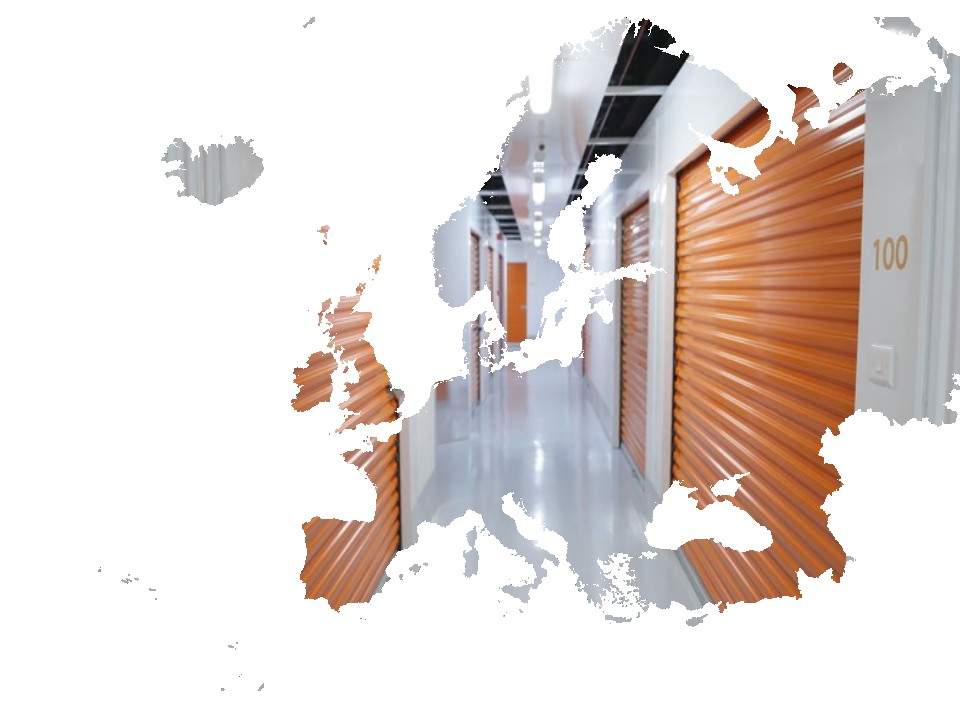

  • Europe’s Self-Storage Market: A Rising Star for Institutional Investors

    Europe’s Self-Storage Market: A Rising Star for Institutional Investors

    In recent years, the European self-storage market has transitioned from a niche segment of the real estate industry into a key focus for institutional investors. With urbanization, limited housing space, and the growing appeal of flexible storage solutions driving demand, the sector has demonstrated impressive resilience and growth, even amid broader economic uncertainty. Today, Europe’s self-storage industry stands as a robust and attractive investment opportunity.

    An Undersupplied Yet Growing Market

    The European self-storage industry has historically lagged behind its counterpart in the United States, where per-capita storage penetration is nearly five times greater. In Europe, there is just 0.2 square meters of storage space per capita compared to 0.9 square meters in the U.S. (FEDESSA Annual Report, 2024). However, this gap has been narrowing as operators expand into key urban markets, driven by rising awareness and demand.

    Regions with higher penetration, such as the UK and France, have seen steady growth through both acquisitions and organic development. For example, Shurgard’s acquisitions in London and Paris, coupled with Safestore’s continued expansion in Southeast England, have cemented these countries as self-storage hubs (Shurgard Corporate Report, 2024, Safestore Corporate Report, 2024). The UK remains the largest self-storage market in Europe, accounting for 34.6% of all facilities, with occupancy rates often exceeding 90% (FEDESSA Annual Report, 2024).

    Emerging Markets with Untapped Potential

    Despite growth in more mature markets, the European self-storage market remains far from saturation. Countries like Spain and Italy, where penetration rates are well below the European average, present significant opportunities for expansion. In Spain, the number of facilities has doubled over the last five years, driven by growing urbanization and changing lifestyles (CBRE Self-Storage Insights, 2024). Italy, which recently attracted joint ventures from global players like Nuveen and Safestore, is another market with untapped potential (Safestore News). Germany, despite its size, remains underpenetrated compared to its neighbors, making it a key target for institutional investors (FEDESSA Annual Report, 2024).

    Urbanization Drives Demand

    Across Europe, urbanization has been one of the biggest drivers of self-storage growth. Many urban residents face limited living space, with the average home size in the UK at just 76 square meters compared to 216 square meters in the U.S. (CBRE Self-Storage Insights, 2024). The shift towards remote working has only amplified this trend, as households increasingly require space for home offices, further reducing available storage at home. Cities like Paris, Barcelona, and Milan have seen particularly strong demand, with new developments rapidly filling capacity in these areas (FEDESSA Annual Report, 2024).

    Businesses Fuel Growth

    Businesses account for over 30% of self-storage customers in Europe, with e-commerce companies, tradespeople, and startups relying on these facilities for inventory and operational flexibility. The rise of online retail has been a major contributor, as small and medium-sized enterprises seek scalable, cost-effective alternatives to traditional warehouse space.

    Institutional Investment on the Rise

    Institutional investors have played a pivotal role in transforming the self-storage landscape in Europe. Over the last few years, several high-profile acquisitions have reshaped the sector. Shurgard has expanded its footprint across Germany, the UK, and France, while Nuveen has partnered with Safestore to enter the Italian market through the acquisition of Easybox. Hines, a global real estate investment firm, recently made its debut in European self-storage by acquiring a portfolio in England (Shurgard Corporate Report, 2024, Safestore News, Hines News).

    This influx of capital has not only driven consolidation but also spurred innovation. Operators are adopting digital solutions such as automated access systems, online reservations, and data-driven management tools to improve efficiency and customer experience (FEDESSA Annual Report, 2024). Sustainability is also becoming a key focus, with many operators incorporating energy-efficient technologies and renewable energy systems.

    A Promising Future

    For institutional investors, private equity firms, and major real estate funds, the European self-storage sector offers a unique combination of stability, growth, and scalability, making it an increasingly attractive asset class. One of its key appeals is its non-discretionary nature, which ensures consistent demand even during economic downturns. Unlike other real estate sectors that are more closely tied to economic cycles, self-storage benefits from steady demand drivers such as urbanization, life transitions, and business needs, making it highly resilient in times of uncertainty.

    Additionally, self-storage boasts strong operational margins due to its low staffing requirements and scalable business model. Facilities are often designed to accommodate both current demand and future growth, with minimal additional investment. This combination of high efficiency and predictable cash flows is particularly attractive to private equity firms seeking stable, recurring revenue streams.

    For major real estate funds, self-storage offers diversification and favorable risk-adjusted returns. The sector’s low penetration in Europe compared to the U.S. provides ample room for expansion, and the opportunity for portfolio aggregation allows institutional investors to consolidate fragmented markets, unlocking economies of scale. Furthermore, the scarcity of well-located land and zoning constraints create high barriers to entry, which protect existing operators and support long-term rental growth.

    Rising institutional interest has also driven innovation within the sector, with many operators adopting advanced technologies such as automated access systems, remote monitoring, and dynamic pricing models. These advancements enhance operational efficiency and align well with the long-term value-creation strategies pursued by private equity and institutional funds. As sustainability becomes a core consideration for investors, self-storage’s ability to integrate eco-friendly practices, such as energy-efficient lighting and renewable energy systems, adds another layer of appeal.

    With strong fundamentals, high demand, and significant growth potential in underpenetrated markets, the European self-storage industry is uniquely positioned to deliver exceptional returns for years to come. For institutional investors and private equity firms seeking a defensive yet high-growth asset class, self-storage stands out as a compelling investment opportunity.

  • The Evolution and Future of the European Self-Storage Industry

    The Evolution and Future of the European Self-Storage Industry

    Origins and Early Development

    The self-storage industry in Europe traces its roots back to the 1980s, significantly lagging behind its U.S. counterpart, which began in the 1960s. Early adoption was slow, with the first facilities emerging in the United Kingdom and Scandinavia. Unlike in the U.S., where suburban sprawl and ample land facilitated rapid growth, Europe’s densely populated cities, limited urban space, and stricter zoning regulations hindered development.

    Throughout the 1990s, pioneers in the UK and France began to establish self-storage facilities, targeting urban centers where space constraints and rising housing costs created demand for external storage solutions. Early operators relied on converting existing buildings, such as warehouses and industrial facilities, due to high real estate costs.

    Rapid Expansion: 2000s to 2020s

    The turn of the millennium marked a period of steady growth as awareness and acceptance of self-storage increased. By the 2000s, larger players such as Safestore, Shurgard, and Big Yellow entered the market, bringing professionalization and scale to the industry.

    Key milestones during this period include:

    1. Geographic Expansion: The industry spread from the UK to continental Europe, particularly to France, Spain, and Germany.
    2. Institutional Investment: The entry of private equity and institutional investors provided the capital necessary for expansion and innovation.
    3. Consumer Behavior: Increasing urbanization, smaller living spaces, and a shift toward renting over homeownership fueled demand for self-storage.

    The 2010s saw the industry evolve into a mainstream asset class. Industry associations like the Federation of European Self Storage Associations (FEDESSA) provided benchmarks, while growing investor interest culminated in record-breaking deals, such as the acquisition of Shurgard by Public Storage in 2018.

    Current Landscape

    Today, Europe boasts over 9,500 facilities with 16.5 million square meters of self-storage space. The UK remains the largest market, but countries like Spain and Germany are witnessing accelerated growth. Despite this progress, the European self-storage market remains underpenetrated compared to the U.S.:

    • Europe averages 0.2 square meters of storage space per capita, compared to 0.8 square meters in the U.S.
    • Many regions, including Eastern Europe, remain largely untapped, presenting significant opportunities for expansion.
    Predictions for the Future

    The European self-storage industry is poised for continued growth, driven by several factors:

    1. Urbanization and Housing Trends
      As European cities become denser and housing costs rise, the demand for external storage will increase. Cities like Berlin, Madrid, and Warsaw are expected to emerge as key growth hubs.
    2. Technology Integration
      Automation, contactless rentals, and remote management systems will become industry standards, improving efficiency and customer experience. Investors are already favoring technology-forward operators.
    3. Institutionalization and Consolidation
      With growing institutional interest, mergers and acquisitions will likely consolidate the industry, leading to the dominance of a few large players. Smaller, regional operators may face challenges unless they differentiate through niche offerings.
    4. Sustainability
      Environmental concerns will shape future development. Operators are increasingly adopting sustainable practices, such as energy-efficient facilities and adaptive reuse of existing buildings.
    5. Emerging Markets
      Countries in Eastern and Southern Europe, where self-storage remains a novel concept, offer immense potential. As disposable incomes rise and consumer habits shift, these regions are expected to mirror the growth trajectories seen in Western Europe over the past two decades.
    Conclusion

    The European self-storage industry, from its modest beginnings in the 1980s, has matured into a dynamic, high-growth sector with significant untapped potential. Its future will be shaped by urbanization, technological advancements, and the need for efficient, sustainable solutions. For investors, the combination of stable cash flows and robust growth prospects positions the industry as an attractive asset class in the coming decade.

    By placing the industry’s development within this historical context, we gain a clearer vision of its trajectory and the exciting opportunities that lie ahead.